Just a phase?
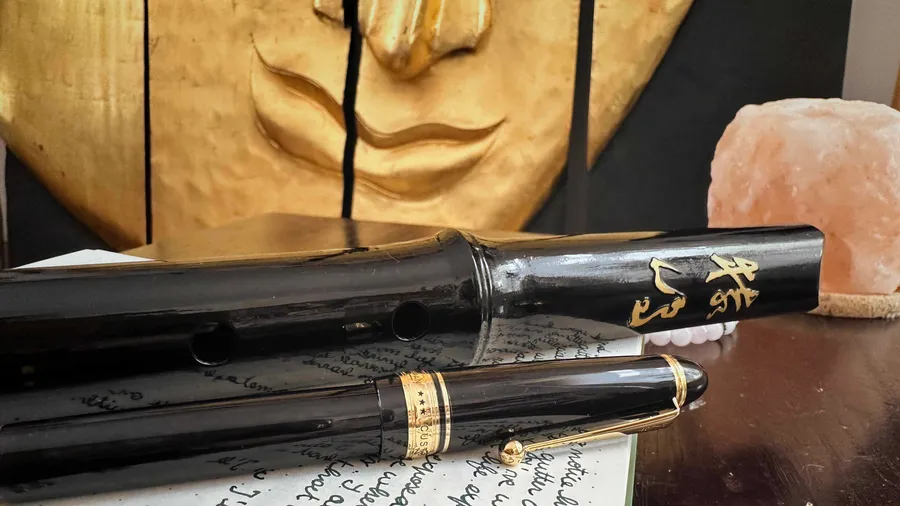
On hitoyogiri - Just a Phase?
When I started posting videos about hitoyogiri instead of shakuhachi, views dropped off a cliff.
I wasn’t surprised, exactly. Shakuhachi has a following — a real one, with forums and grading systems and people who have devoted decades to it. Hitoyogiri has a handful of enthusiasts scattered across a few countries and there are very few teachers keeping the whole thing alive.
What I hadn’t anticipated was the texture of the dismissal. An acquaintance told me he’d made a musician friend listen to one of my recordings. His verdict: it’s a bit off, right? He said it kindly, I think, meaning to commiserate. But I remember sitting with that for a while. Off. Not strange, not unfamiliar. Off, as in: not quite making it.
That was the moment I understood what I’d taken on.
Hitoyogiri was progressively replaced by the modern shakuhachi during the seventeenth century. The reasons given are mostly about limitation — the hitoyogiri couldn’t do what musicians increasingly wanted to do, couldn’t adapt its tonal range to the new scales, couldn’t project across a large room, couldn’t compete. Progress happened, and the hitoyogiri stayed behind.
Nowadays, hitoyogiri is often approached as a “phase” in shakuhachi learning. Almost like archaeology. Shakuhachi players are encouraged to try it in order to get a feel of what the “proto-shakuhachi” was like — the unspoken assumption being that the player will have exhausted it quickly, and return to the real work. In essence, it is treated like a stepping stone rather than a destination.
I’ve always thought this framing misses something. The dodo went extinct too, and you could explain it the same way: couldn’t do what a swan or even a pigeon does, couldn’t adapt, lost the competition. True, in its way. And also a little absurd when you picture an actual dodo, that round, candid, utterly singular creature who simply had its own way of being in the world and never pretended otherwise.
The hitoyogiri was something like that. It existed fully in the Muromachi world it was made for, played what it was built to play, then got erased by an encounter with a world that wanted something else.
There’s a particular freedom that comes from loving something nobody else is paying attention to.
When I play shakuhachi, I feel the weight of comparison. Amazing players, recordings, standards. Even in the most generous teaching environment, the instrument carries the apparatus of a tradition with opinions about how things should sound. There is always, somewhere in the back of the mind, a benchmark.
With hitoyogiri, there is no such weight. Nobody is waiting for me to get it right. Nobody has a strong opinion about my tone. The friend-of-a-friend who found it off has already moved on and forgotten it existed. The small community of people who love this instrument mostly love it the way you love something rare and hard to explain — fondly and indiscriminately, without needing to rank it.
I’d been trying to articulate for months why hitoyogiri felt different from every other musical practice I’d experienced. The answer holds in one phrase.
Hitoyogiri doesn’t ask me to be a certain way. It only asks me to be true.
I spent a long time being very good at performing the version of myself that others found acceptable. It’s a useful skill and an exhausting one, and at some point — gradually, then all at once — I stopped being able to sustain it. Things I’d built up carefully started coming apart. What was left underneath felt closer to something real, but also raw and unaccustomed to light.
I don’t think it’s a coincidence that hitoyogiri arrived around the same time.
The instrument’s so-called limitations, the very things that make it off to a casual listener, are what make it hospitable to that kind of honesty. There is no technique flashy enough to hide behind. The melodies are short, cyclical, almost mantra-like — you have to go back through them again and again, and each time the question is the same: are you actually here, or are you performing being here? The flute, being a flute, doesn’t care about your answer. But you start to notice the difference.
Nick’s lessons work the same way. There is no gamification, no ladder to climb, no sense that covering more material faster means you’ve learned more. You sit with a melody the way you sit with yourself in zazen — returning to it, finding it slightly different each time, not because it has changed but because you have.
For a long time I resisted this. I wanted to move through the modes quickly, wanted to tick boxes, wanted the comfort of measurable progress. And then I stopped.
I love the dodo.
I love it for being trusting, impractical, roundly itself. I love that it never apologised for not being a duck. I love that the people who care about dodos — and there are such people — care with a specificity and a tenderness that has nothing to do with utility.
The hitoyogiri community is a little like that. Small enough that everyone finds each other eventually. Devoted in the way that only makes sense from the inside. Not trying to convince anyone, exactly — just continuing.
That’s where I find myself now: continuing. Playing an instrument that is a bit off, in the best possible sense. I’m not asking it to be something it isn’t. And I do try, with varying success, to extend the same courtesy to myself.